Hagia Sophia

Hagia Sophia

Wednesday, July 3, 2013

Asian Mosques

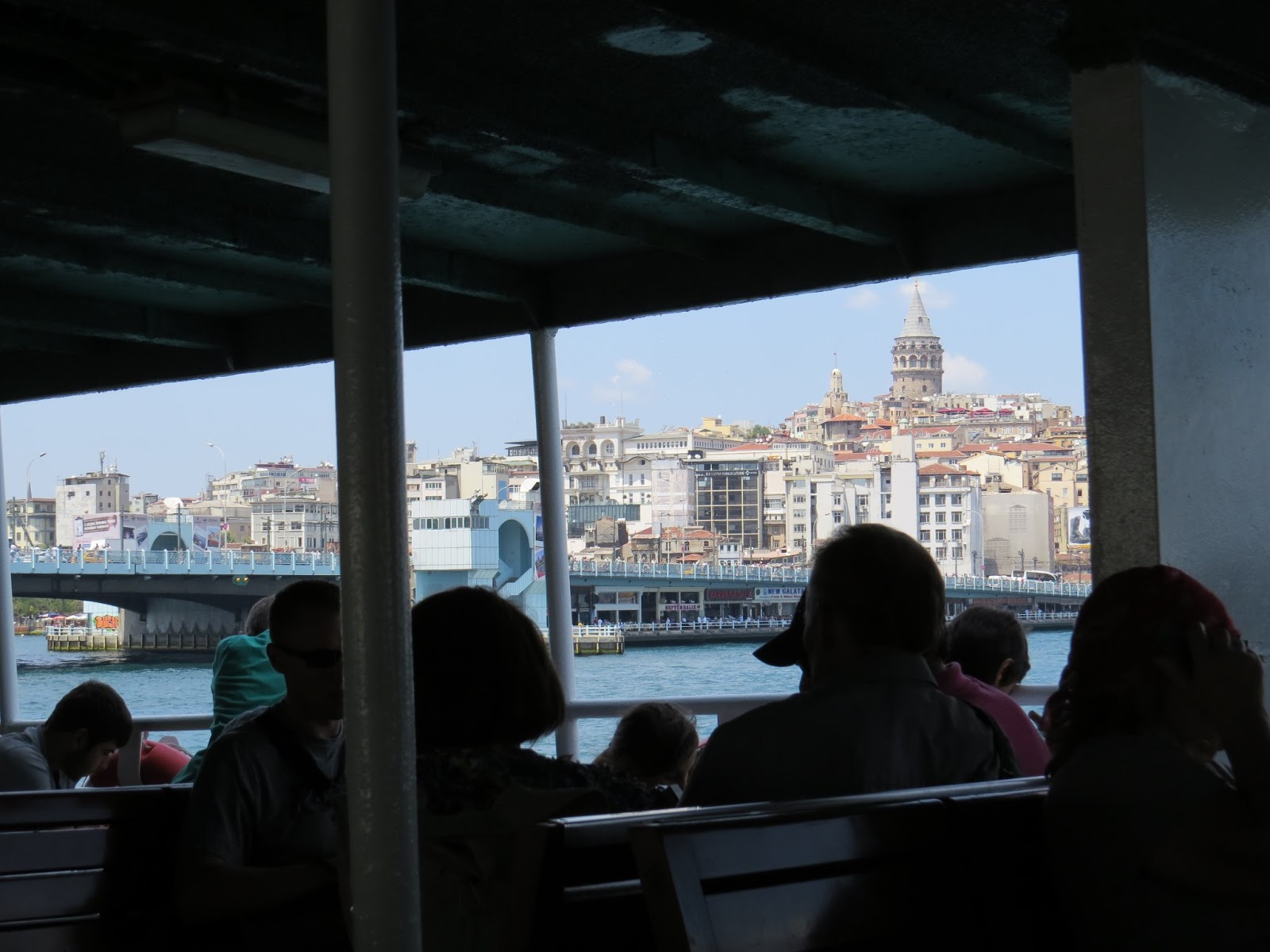
Continuing our Ottoman theme in week 2, we set off for the Asian side of Istanbul.  First a ferry ride over to the Asia side.  Our first stop was the Harbor mosque, a much different scale than the Suleymaniye the day before.

It was fun taking pictures of the area we are staying...a different perspective.
 
The Harbor Mosque, Semsi Ahmed Pasa Camii. 


Right by the harbor at the Harbor Mosque


Our second mosque of the day (sorry Matthew, I can't remember the name!) had a school attached to it.  Here are some young students with their teacher. 

 
Much different interior than the mosques we visited yesterday.

 
The last Asian mosque that we visited, the Buyuk Selimiye Camii, was built in the early 1800s.  The architecture (particularly the columns and archways) show a changing style to the architecture and a bit less grandeur for an empire losing some prestige by the 1800s. 


"There is a belief that people in Istanbul practice religion.  Actually, they practice soccer." 
 Emre Sunu, assistant director, Istanbul, Crossroad between the East and West
 
Some of our NEH scholars playing soccer with the boys outside the mosque.  A little cultural exchange!


Walking Tour of Istanbul Mosques

My head scarf was working overtime on Tuesday.  We toured three mosques in Istanbul:  The Suleymaniye Mosque, the Rustem Pasha Mosque, and the new Mosque (Yeni Camii).  See pictures below.

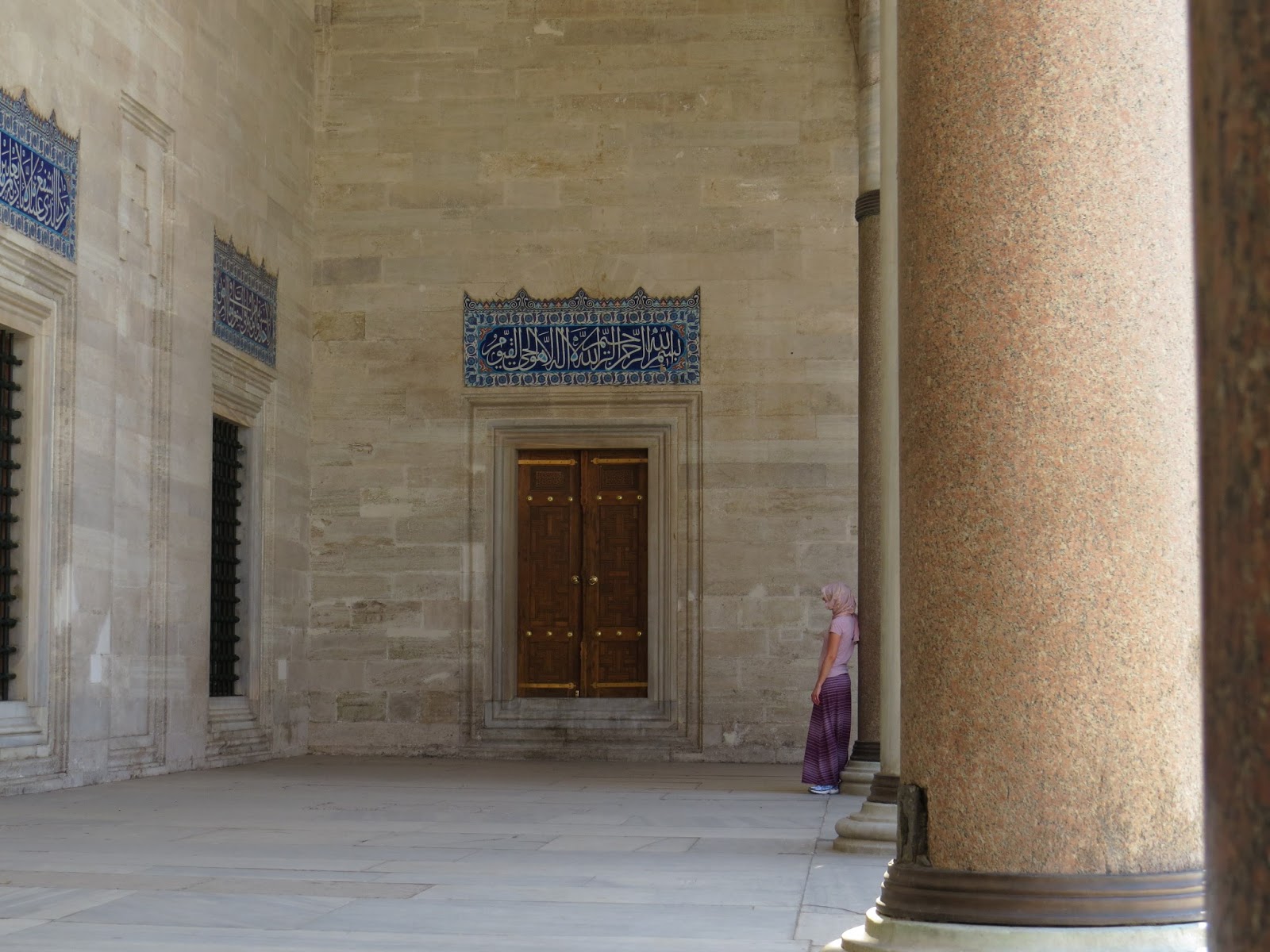
The Suleyman Mosque.  Built by Suleyman the Magnificent from 1550-58.  The architect, Mimar Sinan, went on to build many other mosques and other structures in the city.
 
The largest mosque in Istanbul.

Men performing the ritual cleansing before prayer.  They wash their hands, faces, and feet as well as rinse out their mouths.


Our group on the steps outside the mosque

The Rustem Pasha mosque was built in hour of this Grand Vizier in the 1560s.  The same architect, Mimar Sinan, relied on rich mosaic tiles throughout the mosque. 

A woman praying in the women's area of the mosque. Men pray in the open area facing the niche--see above.  On Friday (holy day) men will arrive and stand shoulder to shoulder for service.  No hiding in the back pew to be the first to leave!

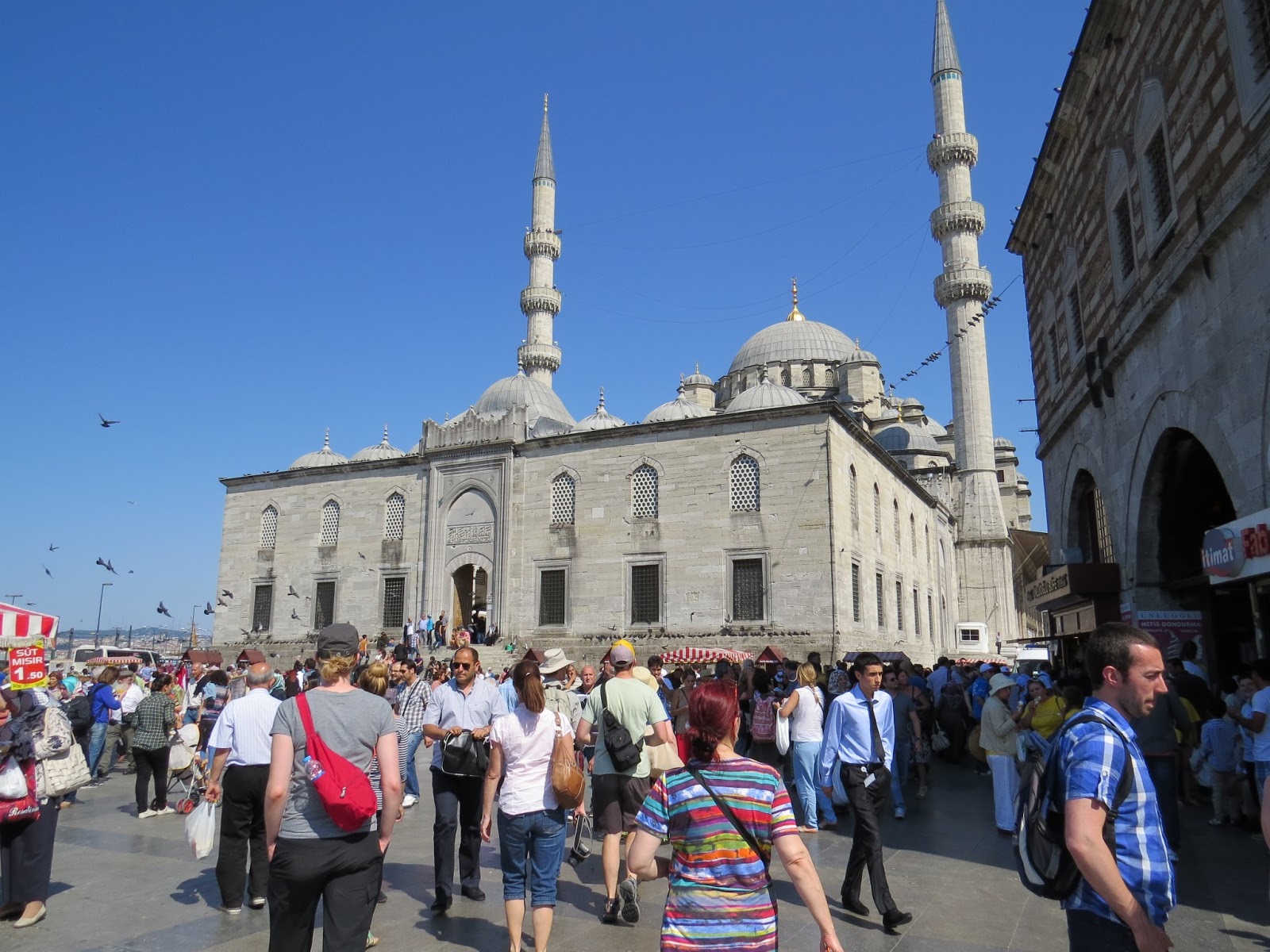
The New Mosque--Yeni Camii.  I guess a mosque built in the late 1500s is considered "new" in this city!


Again, beautiful mosaic tiles cover the interior.  Located near the Spice Bazaar and down the hill from the other two mosques. 
Can you detect the three mosques as they cascade down the hill?  From the left, in the foreground is the New Mosque, then Suleymaniye is the dome somewhat in the middle set high up on the hill.  The hardest to detect is the small dome above the little row of red flowers on the right-hand side. 


Grand Bazaar

The Grand Bazaar
I visited the Grand Bazaar yesterday during lunch and again before dinner.  Through history, this site has been about trade.  Starting with a town called Byzantium that was a shipping point for trade in the Roman Empire, it grew to be a crossroads of trade for Constantinople.  As Istanbul, it became a center for trade that connected the Muslim world to Europe.  Mosques were built with surrounding markets to serve the Muslim communities, so today we still see markets (bazaars) near the mosques throughout Istanbul.  Here are some pictures from the largest bazaar...very easy to get lost in the wandering paths through the booths.  Today vendors will say anything to a passing tourist to get you to take a look at their shop.  Because there is such diversity among the tourists, they often try several languages as one passes by.


Our friend Samer working in the Spice Bazaar

Monday, July 1, 2013

Trivia Question Monday July 1st

Trivia Question of the Day

Which Ottoman sultan broke with years of tradition to marry a concubine and have several children with her?  (Spelling doesn't count for his name!)

Answer:  For many years, the sultan made political alliances through marriage (without children) and had multiple concubines at the imperial palace.  The harem provided a pool of potential heirs to the throne.  Suleyman the Magnificent (r. 1520-1566) broke with tradition when he married his concubine, Hurrem.  Hurrem held significant sway over Suleyman and the Grand Vizier, Rustem Pasha (conveniently married to her daughter).  Through these relationships she managed to have the heir apparent Mustafa executed and one of her sons inherited the throne, maintaining her power over the imperial palace. 

Here come the Turks!

Monday began our study on the Ottoman invasion/conquest/transition or the Byzantine decline/fall/???  As you can tell, we have talked a lot about narratives.  How is history presented and by who?  Great practice for our AP World History students and thinking about point of view.

Today we visited the Topkapi Palace, the imperial palace for the Ottoman Sultan.  Various phases of courtyards kept him, his family and harem, and his advisors secluded from the public.  Beautiful and grand without being ostentatious. 


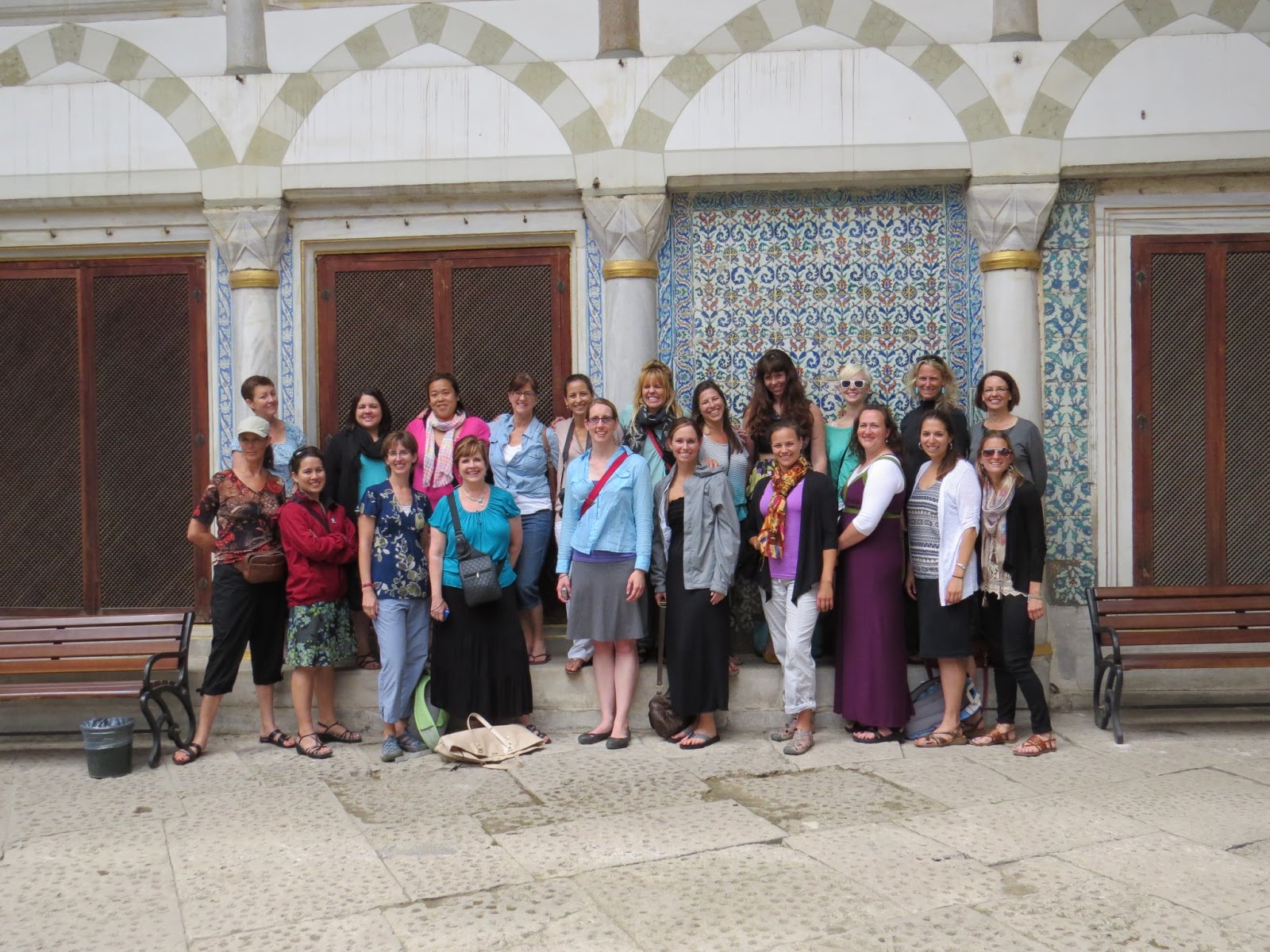
The NEH female scholars posing in the courtyard of the harem ("forbidden") portion of the palace

Inside the forbidden palace rooms


Views of the courtyard

Week 2: The transition to Ottoman Istanbul

On Sunday we took an excursion to Bursa, the first Ottoman capital on the Asia side of Turkey.  A packed day of travel, we visited several mosques and shrines that celebrated the leadership of the first Ottoman leaders.  Frequently, mosques have a close relationship with market places and in this case, the silk bazaar.  There has been a silk trade in Bursa for almost 1000 years.


A ferry ride across the Sea of Marmara


Pictures from the silk bazaar at Bursa

A Koran at the Islamic Museum (note the size of the Koran by comparing it to the woman behind the exhibit

The Green Mosque

Inside the Green Mosque...waiting out the rainstorm.  Notice the shoe rack behind me that holds shoes for worshippers and visitors.

An Ottoman sultan shrine, including shrines for relatives

Our group outside the Sultan's shrine

A Janissary (infantry soldier).  He didn't blink an eye when I reached for the knife in his belt.

A busy weekend

Saturday

Saturday we took a cruise on the Bosphorus Strait, the waterway between Europe and Asia.  The scenery was beautiful and an interesting mix of historical eras.  Ancient buildings surviving alongside modern infrastructure.  Gives me some ideas about the unit on Urban Land Use for Geography.

We disembarked at Romeli fortress.  Built in 1451-52 by Sultan Mehmet II, it was a successful attempt to cut off Constantinople from trade and sea travel with the Black Sea.

One of the Imperial Palaces built along the Bosphorus

Romeli Fortress


After a bus ride back to Istanbul, we arrived at Galata Tower.  This tower, which gives an incredible 360 degree view of Istanbul, was built in 1348 by the Genoese, traders from Italy that traded extensively with Constantinople/Istanbul.

After the tower, we wandered through the shops around Taksim Square.  There was a protest planned for that evening, so we left mid-afternoon.